
Faith, Fiction, and the Longing for Something Slower
Over the past few years, I’ve noticed something interesting happening in the reading world.
On one hand, books have become increasingly fast, intense, emotionally explosive, and highly sensual. “Spicy” fiction has become so normalized that many readers almost expect explicit content as part of modern storytelling now. Entire marketing categories revolve around tropes, tension, and escalating romantic intensity. And honestly, sometimes it feels like stories are competing to see how shocking, addictive, or emotionally overwhelming they can become.
But quietly, underneath all of that noise, I think another movement is happening too.
Over the past few years, I’ve noticed something interesting happening in the reading world.
On one hand, books have become increasingly fast, intense, emotionally explosive, and highly sensual. “Spicy” fiction has become so normalized that many readers almost expect explicit content as part of modern storytelling now. Entire marketing categories revolve around tropes, tension, and escalating romantic intensity. And honestly, sometimes it feels like stories are competing to see how shocking, addictive, or emotionally overwhelming they can become.
But quietly, underneath all of that noise, I think another movement is happening too. People are growing tired. They’re tired of cynicism, emotional chaos and of relationships that feel disposable. They’re exhausted of stories that confuse intensity for intimacy and of narratives that leave them emotionally exhausted rather than deeply nourished. And I think many readers, especially women, are beginning to rediscover a longing for something slower, steadier, gentler, and more meaningful. They’re yearning for something deeper, something that goes beyond the surface-level, shallow, and emotionally flat. They’re wanting something with roots that run deep, stories that breathe, and narratives where relationships unfold gradually (more realistic to real life). Women are wanting stories were emotional intimacy matters as much as physicial attraction, if not more. Stories where people are transformed over time instead of instantly consuming one another.
I think that longing says something important about us.
Because at its core, fiction shapes our imagination.
The stories we consume do not simply entertain us; they disciple our hearts in subtle ways. They shape what we believe love looks like. What relationships should feel like. What is normal. What is desirable. What is worth pursuing. Stories become emotional liturgies, quietly training our desires over time. And while I don’t think every book must look the same, I do think many readers are beginning to realize that endless emotional escalation often leaves them emptier, not fuller.
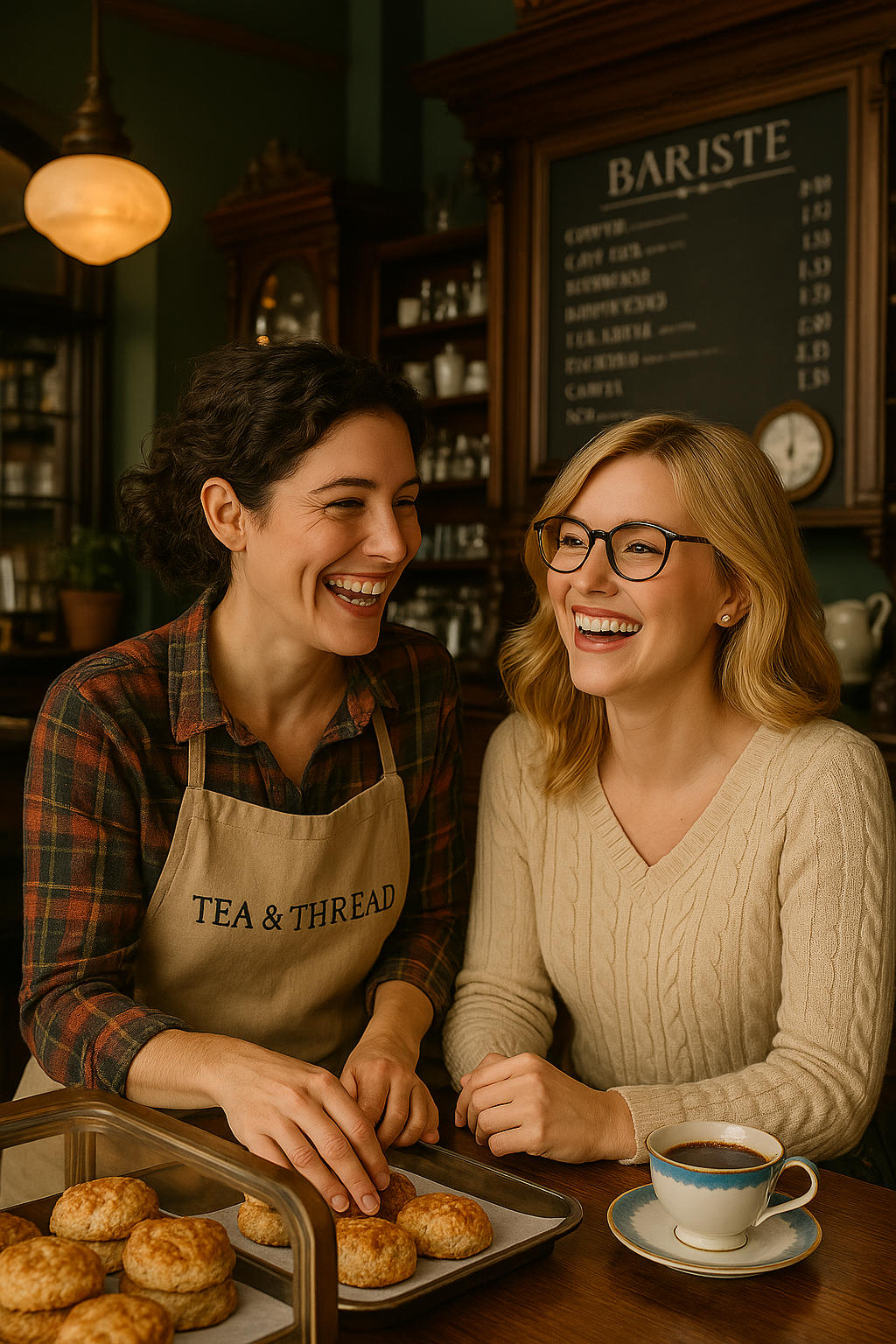
There’s a reason “cozy” fiction has exploded in popularity recently. Readers are gravitating toward stories centered around community, healing, found family, restoration, meaningful relationships, small towns, baking, gardening, tea shops, handwritten letters, and slower rhythms of life.
I don’t think this is escapism alone. I think we’re hungry. For beauty… goodness… tenderness… relationships that feel safe, faithful, and lasting… and for stories were people are seen beyond their physical bodies and straight into their souls.
And honestly, I think faith has something deeply important to say into that longing.
Christian storytelling, at its best, has never merely been about avoiding explicit content or being “hush-hush” about the reality of life. Just open your Bible, and it’s full of trauma, sin patterns, and bad choices. It’s about presenting a fuller vision of humanity. A deeper vision of love. A truer vision of redemption. Faith-filled fiction has the opportunity to remind readers that intimacy is not built solely through chemistry or physical tension. Real intimacy is formed through sacrifice, consistency, forgiveness, trust, vulnerability, safety, and presence.
Real intimacy is demonstrated through staying. Through choosing one another repeatedly. Through grace. That kind of love may not always feel flashy in modern culture, but I think many readers are starving for it.
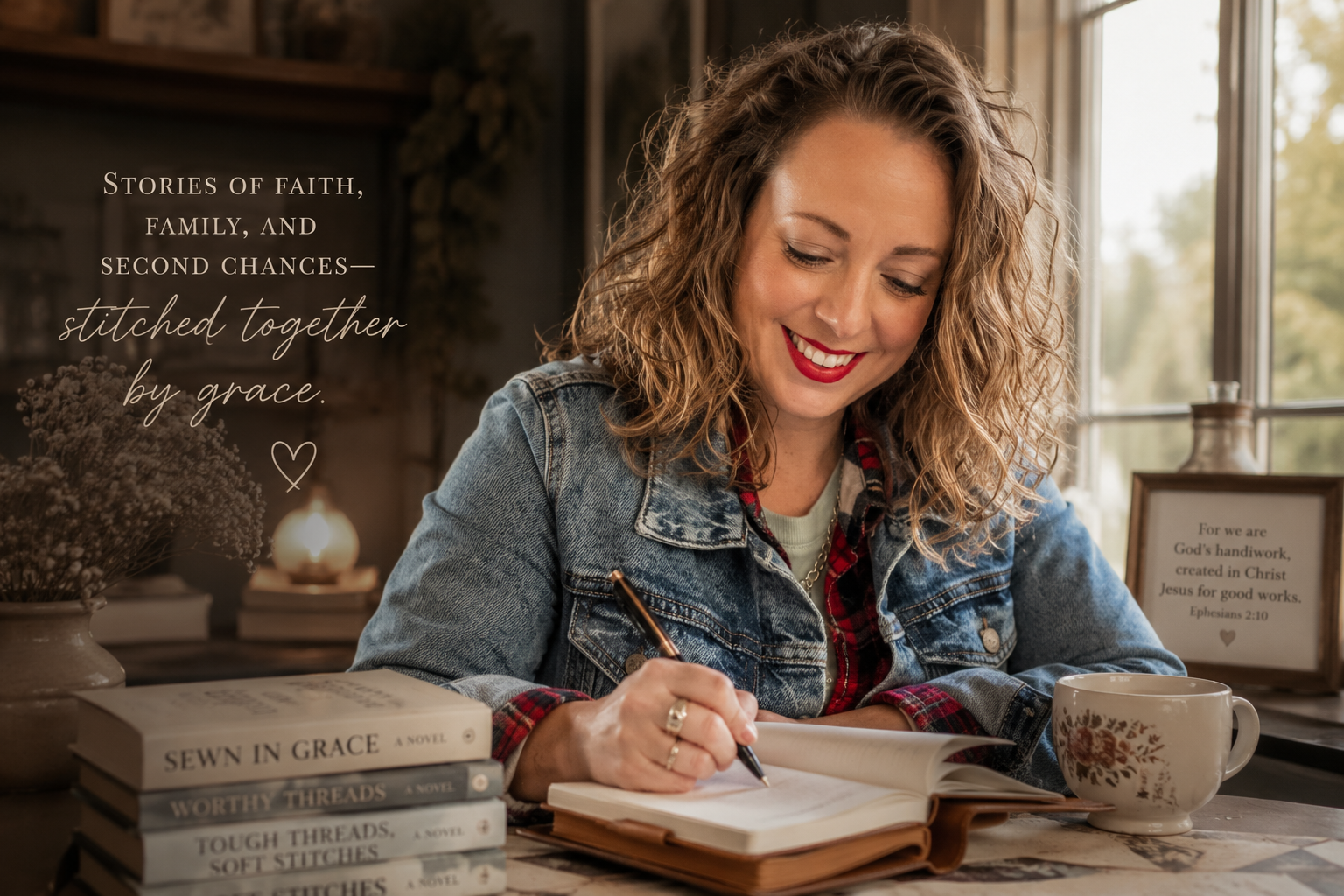
It’s part of why I wrote the Sewn Sisters Series the way I did.
I wanted relationships to unfold slowly and organically. I wanted the emotional lives of the characters to matter. I wanted conversations around kitchen tables to carry as much weight as dramatic moments. I wanted motherhood, friendship, marriage, grief, trauma, and faith to feel honest and grounded. I wanted readers to feel held by the story rather than emotionally wrung out by it.
And perhaps most importantly, I wanted to create a world where tenderness still existed. A world where people care for one another. A world where community matters and healing is possible. I wanted to show the world where beauty is found in ordinary life.
That doesn’t mean the Sewn Sisters Series avoids hard things. Quite the opposite, actually. These books wrestle with trauma, shame, fear, marriage struggles, grief, exhaustion, identity, and emotional wounds. But the goal is never darkness for darkness’ sake. The goal is restoration. Hope. Grace. The quiet belief that broken things can still be rewoven beautifully.
I think many readers are rediscovering that fiction does not need to be emotionally numbing or hyper-sensual to feel powerful. Sometimes the stories that stay with us longest are the ones that remind us what goodness feels like again. The ones that slow our breathing. The ones that make us want to call a friend and say, “You HAVE to read this book!” It’s the books that make us want to do things like bake bread, light a candle, pray, rest, or love people more gently.
Maybe that’s part of the deeper yearning underneath this cultural shift toward cozy, faith-filled, emotionally grounded fiction. I’m not merely a rejecting of “spice,” but I’m embracing a longing for peace, rootedness, and for stories that remind us that there is still beauty, tenderness, faithfulness, and grace left in the world.
cozy Christian fiction, faith and fiction, Christian women’s fiction, emotionally grounded fiction, wholesome fiction for women, slow burn Christian fiction, faith-filled fiction, Christian contemporary fiction, cozy faith fiction, emotionally rich Christian fiction, books without spice, Christian fiction author, Meg Elizabeth Brown, Sewn Sisters Series, wholesome women’s fiction, books about grace and healing, stories about faith and community, emotionally safe fiction, gentle Christian fiction, books about meaningful relationships, cozy small town fiction, Tea & Thread, Christian fiction for women, books about healing and belonging, faith-centered storytelling, restorative fiction, Christian fiction with strong female characters, stories about tenderness and grace, Christian fiction and culture, emotionally nourishing fiction, books for women seeking peace, clean Christian fiction, books about friendship and faith, slow and steady romance fiction, Christian fiction about community, books with emotional depth but no spice, comfort reads for Christian women, books like Jan Karon, inspirational Christian fiction, stories about rootedness and healing